

One cut, made before a paver ever reaches your yard, decides whether it ages gracefully or cracks in half.
If you've installed wood pavers before, you've probably seen it happen: a block that looked perfectly solid on day one develops a clean, straight crack running through its center a season or two later. It's easy to assume this is bad luck, a defective piece, or just "what wood does." It isn't random at all — it's the predictable result of one decision made back at the sawmill, long before the paver ever reached a job site.
That decision is where the pith sits inside the block. And it's the single biggest factor in whether a wood paver weathers gracefully for years or splits down the middle after one dry season.
What the Pith Is, and Why It Matters
The pith is the tree's original center core, the point all of its growth rings radiate outward from. Every piece of wood cut from a tree has a pith somewhere in it, and where that point lands inside a paver block matters more than most buyers realize.
Here's the underlying mechanism: wood doesn't shrink evenly as it dries. It shrinks significantly more along the direction of its growth rings than it does across them. That difference in shrinkage rate creates internal stress inside every single wood paver as it ages. The only question is what that stress does once it builds up: does it have somewhere to go, or does it tear the block apart trying to find release?
The Two Cuts, Side by Side

Most wood pavers on the market are cut with the pith buried in the center of the block. It's the simplest, most obvious way to mill a round log into a square paver, so it's become the industry default. But it comes with a structural cost that doesn't show up until the block has had time to dry and age in place.
When the pith is centered, that uneven shrinkage has nowhere to go. As the block dries, stress radiates outward in every direction from the middle, and eventually the wood tears open in a straight line to release it. The result is a relief split running straight through the paver, splitting it in half.
ProFlow pavers are milled differently. We cut every block so the pith falls at a corner or edge instead of the center. The wood still shrinks, and the rings still age and weather exactly the same way. But now that natural drying stress has somewhere to release along the outer edge, instead of tearing through the middle of the block. Same wood. Same weather. Same aging process. The difference is entirely in the cut.
This Isn't Cosmetic — It's Structural
It's worth being clear about what a "relief split" actually is, because it's easy to mistake it for a minor cosmetic flaw. It isn't. A block with a split running through its center is a structurally broken paver. It can shift under foot traffic, trap water at the crack line, and accelerate further weathering and decay right at the point of failure.
That matters most in a permeable paver system, where the whole point of the installation is to let water pass through the surface in a controlled, predictable way. A cracked block changes how water moves through the joint, and it does it exactly where you don't want a structural weak point. Choosing a paver with the right pith placement isn't just about how it looks a few years down the line; it's about whether the installation still performs the way it was designed to.
Why This Is a Sawmill-Level Decision
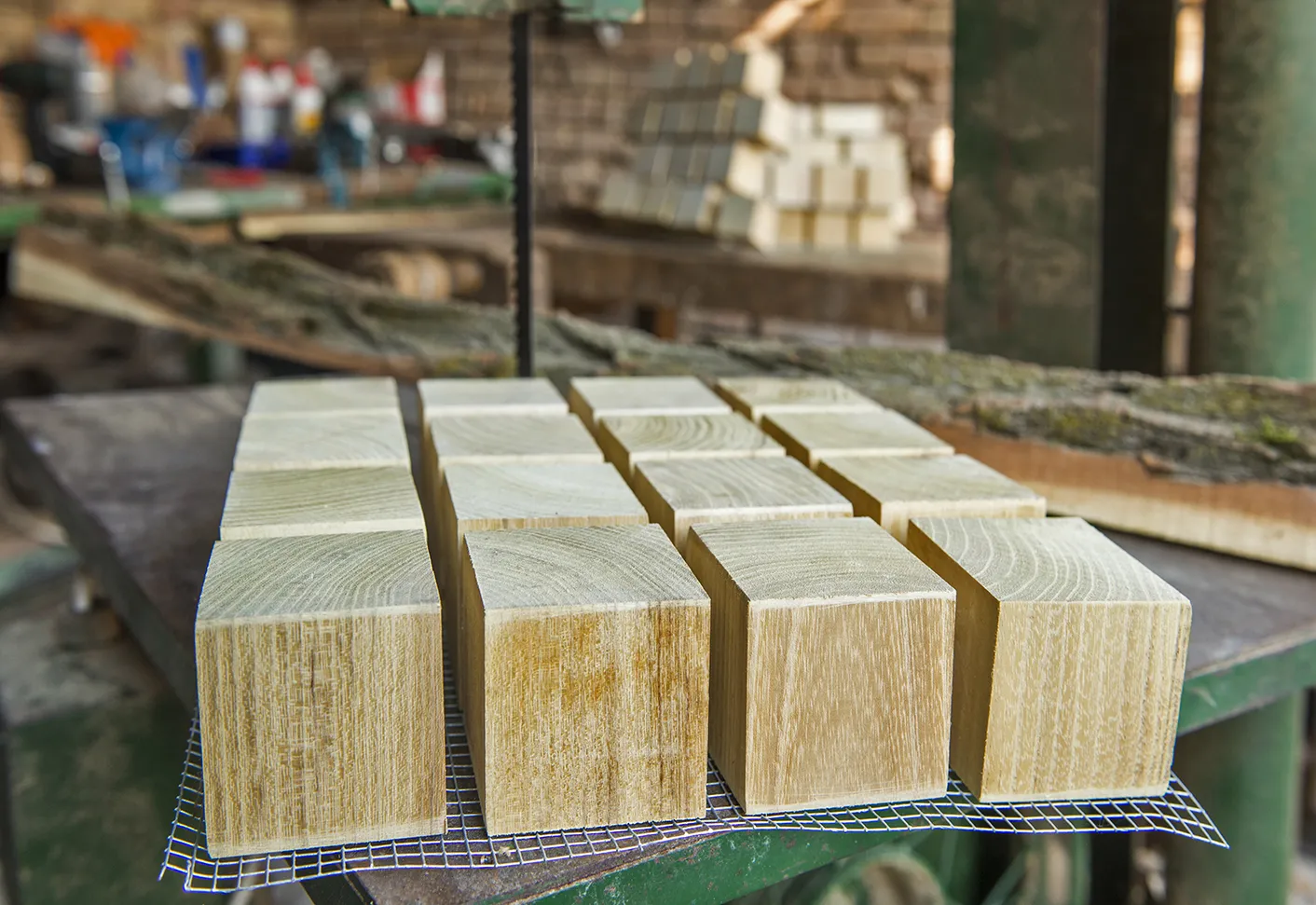
The important thing to understand is that none of this is something you can fix, inspect for, or correct after the fact. The pith's position is locked in the moment a block is cut. There's no finishing step, sealant, or installation technique that changes where the stress in that block is going to travel as it dries.
That's why we treat pith placement as a milling decision, not an afterthought. Every ProFlow block is cut with the pith positioned at a corner specifically so the block has somewhere for its natural drying stress to go. It's a deliberate choice made at the saw, and it's the reason we can say our pavers are built to last by design, not by luck.
The ProFlow Difference
Same wood. Same aging. Same weather exposure. The only variable is the cut, and that one variable is the difference between a paver that develops a structural crack and one that simply weathers in place, rings visible, fully intact, for years longer.
We'd rather you see this for yourself than take our word for it. Ask about a sample paver and check the grain yourself; the pith placement is visible right there in the end grain, and it's the clearest proof point we have.
See It Before You Buy It
Before you choose a wood paver supplier, ask where the pith sits in their blocks. It's a simple question, and the answer tells you almost everything about how that paver will hold up over time.
Request a sample or get in touch:proflowpavers.com | sales@proflowpavers.com
