

One of the first questions architects, landscape designers, developers, and homeowners ask when considering wood paving is simple: "How will it age?"
It is a reasonable concern. Most people are familiar with concrete, stone, brick, and asphalt surfaces. They understand how these materials look when new and how they change over time. Wood, however, often raises questions because many people associate outdoor wood with frequent maintenance, rot, decay, and eventual replacement.
Black Locust wood pavers tell a completely different story.
Renowned as one of the most durable hardwood species available for exterior applications, Black Locust has earned a reputation for exceptional longevity, natural rot resistance, and remarkable structural stability. Unlike many other wood products, Black Locust can thrive outdoors for decades without chemical treatment, making it one of the most sustainable and environmentally responsible paving materials available today.
Perhaps most importantly, Black Locust ages beautifully.
Rather than deteriorating, it undergoes a natural weathering process that transforms its appearance while preserving the qualities that make it such a valuable paving material. Understanding how Black Locust wood pavers age helps property owners appreciate the long-term beauty and performance they can expect from their investment.
The Natural Character of Black Locust
Black Locust is not an engineered material designed to imitate nature. It is nature itself.
Every paver contains unique grain patterns, color variations, growth rings, and textures that tell the story of the tree from which it originated. These natural characteristics create an organic aesthetic that cannot be replicated by manufactured paving materials.
When newly installed, Black Locust wood pavers typically display warm golden hues ranging from honey-colored yellows to rich greenish-brown tones. The exact coloration varies depending on the individual tree, growing conditions, and milling process.
This fresh appearance often becomes one of the defining features of a project. The warmth of natural wood immediately creates an inviting atmosphere that softens hard landscapes and establishes a stronger connection between built environments and nature.
However, the appearance visible on installation day is only the beginning of the story.
The First Year: Initial Weathering
The most noticeable changes occur during the first year of exposure.
As sunlight interacts with the wood surface, ultraviolet radiation begins affecting the natural pigments within the timber. This process is entirely normal and occurs with virtually every exterior hardwood species.
During this initial period, the rich golden tones gradually begin transitioning toward a softer and more muted appearance. Depending on climate, sunlight exposure, and weather conditions, the transformation may occur slowly or relatively quickly.
Many people mistakenly interpret this color change as deterioration. In reality, it is simply weathering.
The wood itself remains structurally sound. The change is primarily cosmetic and affects only the surface layer. The exceptional strength and durability of the Black Locust remain intact.
This natural weathering process is often celebrated by architects and landscape designers because it creates a more refined and mature appearance. Instead of looking freshly manufactured, the paving begins to blend harmoniously with surrounding natural elements.
%20copy.webp)
The Silver Patina: Nature's Signature Finish
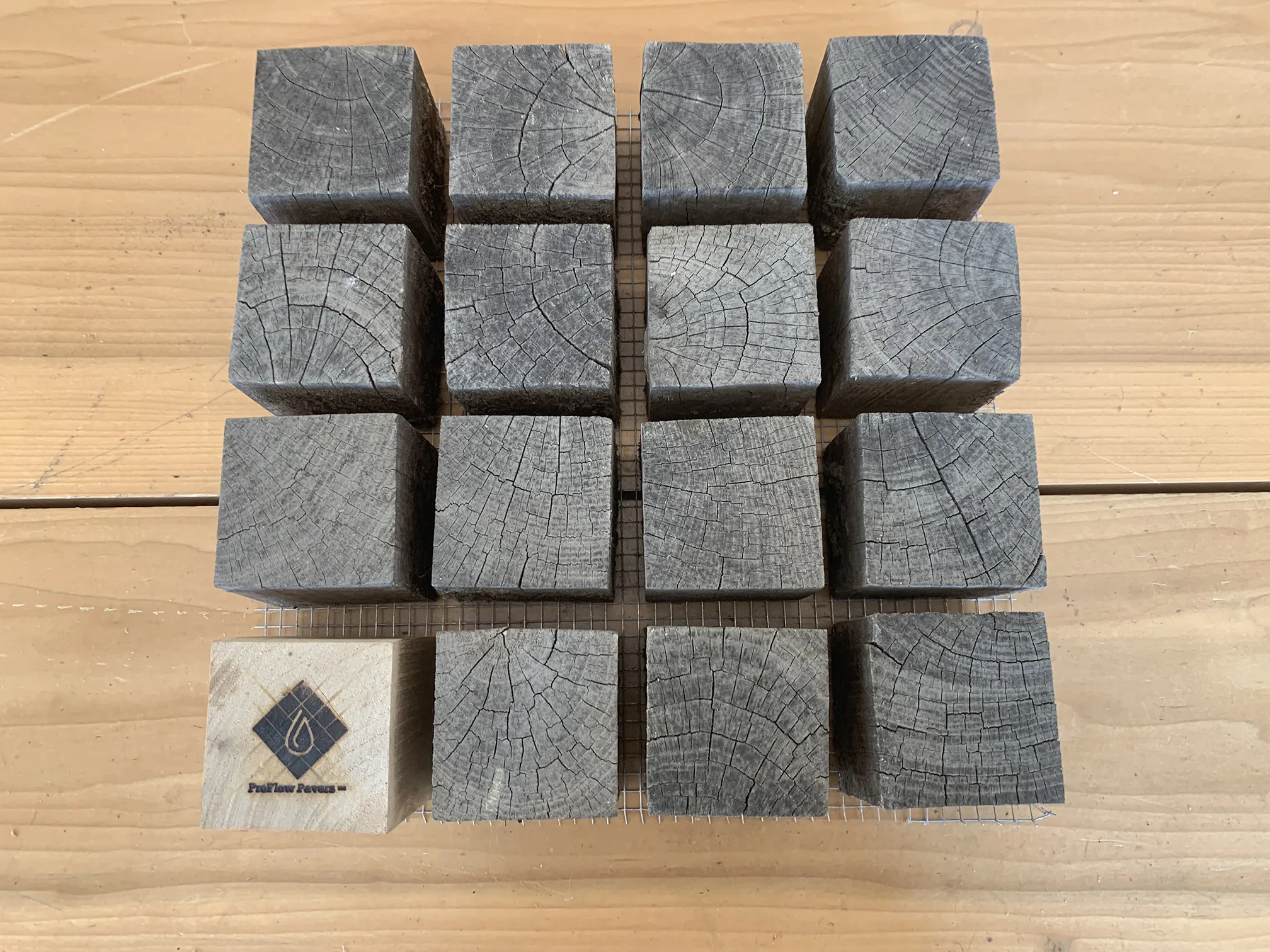
Perhaps the most admired stage in the aging process of Black Locust wood pavers is the development of a silver-gray patina.
Over several years, exposure to sun, rain, wind, and seasonal temperature changes gradually transforms the surface color into elegant shades of silver, gray, and soft earth tones.
This patina is highly sought after in contemporary architecture and landscape design.
Luxury coastal developments, urban plazas, public parks, waterfront promenades, and high-end residential projects often embrace naturally weathered wood because it conveys authenticity and permanence. The silver-gray appearance reflects a material that has matured naturally within its environment rather than being artificially manufactured.
Unlike painted or stained surfaces that can peel, crack, or fail, the patina of Black Locust develops organically. It becomes part of the material itself.
Many designers intentionally avoid applying finishes because they prefer the sophisticated appearance that emerges through natural aging.
Structural Aging Versus Visual Aging
One of the most important distinctions to understand is the difference between visual aging and structural aging.
Many materials look older because they are becoming weaker.
Black Locust often looks older while remaining remarkably strong.
The visual transformation from golden brown to silver-gray does not indicate a loss of performance. In fact, the underlying wood retains the properties that have made Black Locust famous for centuries.
Historically, Black Locust was used for fence posts, railway ties, vineyard supports, agricultural structures, shipbuilding, and other demanding applications where durability was critical. Its natural resistance to decay made it valuable long before modern wood preservation technologies existed.
As Black Locust pavers age, their appearance evolves while their core structural integrity remains largely unaffected.
This combination of beauty and durability is one of the reasons the species continues to gain popularity among designers seeking long-lasting natural materials.
Natural Resistance to Decay
A significant factor influencing aging is biological durability.
Many wood species deteriorate because they are vulnerable to fungi, insects, moisture, and microbial activity. As these organisms attack the wood, structural degradation accelerates.
Black Locust possesses a unique advantage.
The heartwood contains naturally occurring compounds that provide exceptional resistance to decay. These compounds act as nature's own defense system, helping protect the wood from many of the environmental factors that cause deterioration in other species.
As a result, Black Locust frequently outperforms many treated woods in exterior environments.
This natural resistance allows wood pavers to maintain their performance even after years of exposure to challenging conditions. While no organic material is completely immune to the effects of time, Black Locust is widely recognized as one of the most durable hardwoods available for outdoor use.
How Climate Influences Aging
The aging process of Black Locust wood pavers varies depending on location.
In sunny climates, the silver patina may develop more rapidly due to increased ultraviolet exposure. Areas with intense sunlight often see color transformation occur within the first few years.
In wetter climates, moisture contributes to weathering while simultaneously highlighting the species' exceptional decay resistance.
In colder regions, freeze-thaw cycles test the durability of all outdoor materials. Black Locust performs exceptionally well because of its density, strength, and dimensional stability.
Coastal environments present additional challenges, including salt exposure, humidity, and fluctuating temperatures. These conditions often accelerate weathering but also create some of the most beautiful patina effects.
Each installation develops its own unique appearance based on local environmental conditions, making every project distinct.
Surface Texture Through the Years
As Black Locust ages, texture changes can occur alongside color evolution.
The wood may develop subtle surface checking, small natural cracks that occur as moisture levels fluctuate over time. These checks are a normal characteristic of hardwoods exposed to outdoor environments.
Importantly, surface checking is typically cosmetic rather than structural.
Many designers appreciate these natural features because they enhance the authenticity and organic character of the material. Similar characteristics can be observed in historic timber structures around the world that have remained functional for generations.
The result is a surface rich in visual depth and natural texture, qualities that manufactured materials often struggle to reproduce convincingly.
%20copy.webp)
Sustainability and Aging Gracefully
In modern construction, sustainability is increasingly linked to longevity.
A material that requires replacement every decade generates significantly more environmental impact than one capable of lasting for several decades.
Black Locust wood pavers contribute to sustainable design because they combine renewable sourcing with exceptional durability.
As they age, they do not require extensive chemical treatments, resurfacing procedures, or energy-intensive restoration methods. Their natural weathering process reduces the need for ongoing intervention while preserving their aesthetic appeal.
Rather than fighting against aging, Black Locust embraces it.
The material becomes more integrated with its surroundings over time, creating landscapes that feel established, mature, and enduring.
Maintenance and Long-Term Appearance
One of the most appealing aspects of Black Locust wood pavers is their ability to age naturally with little to no maintenance. Unlike many exterior wood products that require regular staining, sealing, or chemical treatments to maintain their performance, Black Locust is naturally durable and resistant to decay.
As the wood is exposed to sunlight, rain, and changing seasons, it gradually develops its characteristic silver-gray patina. This transformation is a natural part of the aging process and does not require any intervention. There is no need for chemical preservatives, protective coatings, or ongoing treatments to preserve the integrity of the material.
Many architects, landscape designers, and property owners appreciate this maintenance-free approach because it allows the wood to evolve authentically within its environment. Rather than spending time and resources trying to prevent natural weathering, they embrace the beauty that develops over time.
The result is a paving surface that remains durable, attractive, and environmentally responsible without the need for routine chemical applications or intensive upkeep. Black Locust wood pavers are designed to be enjoyed in their natural state, aging gracefully while retaining the strength and performance that make them one of the most durable hardwood paving materials available.
A Material That Tells a Story
Perhaps the most remarkable aspect of aging Black Locust wood pavers is their ability to tell a story.
Unlike synthetic materials that strive to remain unchanged, natural wood reflects the passage of time. Seasons leave their mark. Sunlight softens colors. Rain deepens textures. Years create character.
The result is a living surface that evolves alongside the landscape it inhabits.
Every weathered board, every subtle variation in color, and every naturally developed texture contributes to an environment that feels authentic and connected to nature.
This is why many of the world's most respected architects and landscape designers continue to specify natural hardwoods despite the availability of countless manufactured alternatives.
They understand that true beauty often emerges through aging rather than despite it.
Conclusion
Black Locust wood pavers do not simply endure the aging process—they thrive through it.
From their warm golden beginnings to their distinguished silver-gray maturity, they undergo a natural transformation that enhances their visual appeal while preserving their exceptional structural performance. Their natural resistance to decay, impressive durability, and minimal maintenance requirements make them one of the most compelling paving materials available for contemporary landscapes.
While many materials deteriorate as they age, Black Locust develops character, depth, and authenticity. It evolves with its environment, creating outdoor spaces that become more beautiful, more established, and more meaningful with every passing year.
For property owners seeking a paving solution that combines sustainability, longevity, and timeless elegance, Black Locust wood pavers offer something increasingly rare in modern construction: a material that grows more distinguished with age.
