

Trees are among the most valuable features of any landscape. They provide shade on hot summer days, filter air pollutants and capture carbon dioxide.
Whether lining city streets, surrounding office buildings, enhancing parks, or adding beauty to residential properties, trees contribute enormously to environmental health and human well-being.
Yet despite their importance, urban trees face a constant battle for survival.
Unlike trees growing in forests, urban trees must contend with compacted soil, restricted root systems, limited water infiltration, reflected heat from pavement, pollution, and continuous pedestrian or vehicle traffic. Many are planted with good intentions but gradually decline because the conditions surrounding their roots make healthy growth nearly impossible.
One of the most overlooked factors affecting tree health is the design of the tree pit—the area surrounding the base of the tree. While it may appear to be a small detail, the material chosen around a tree can determine whether it flourishes for decades or struggles throughout its life.
Traditional concrete and impermeable paving often trap trees in harsh conditions. Water runs away instead of reaching the roots, oxygen cannot easily penetrate the soil, and high surface temperatures place additional stress on already vulnerable trees.
Permeable wood pavers offer a different approach.
Designed to work with nature rather than against it, permeable wood tree pit systems allow rainfall to infiltrate the soil while creating an attractive, durable walking surface. When manufactured from naturally durable Black Locust wood, these pavers combine exceptional longevity with environmental responsibility, making them an excellent solution for tree pits in parks, streetscapes, campuses, commercial developments, and residential landscapes.
Rather than treating trees as obstacles within hardscape design, permeable wood pavers help integrate healthy urban forests into functional public spaces.
Understanding the Purpose of a Tree Pit
A tree pit is much more than the opening left around the trunk of a tree. It serves as the interface between the living root system below ground and the active human environment above it.
Its primary purpose is to provide sufficient space for water, oxygen, and nutrients to reach the root zone while protecting the surrounding landscape from erosion and excessive wear. A well-designed tree pit also accommodates pedestrian circulation, improves safety, reduces maintenance, and contributes to the visual character of the site.
In modern cities, tree pits are found almost everywhere. They appear along sidewalks, in plazas, shopping districts, hotel entrances, parks, schools, botanical gardens, office complexes, healthcare facilities, and residential developments.
Unfortunately, many conventional tree pits prioritize pavement over biology.
When impermeable concrete completely surrounds a tree, only a very small opening remains near the trunk. Although this may appear neat and orderly, it significantly limits the tree's ability to receive the resources it needs to survive.
A tree's root system often extends two to three times wider than its canopy. Restricting the soil surface with impermeable materials prevents rainwater from naturally infiltrating across this larger rooting area, forcing trees to depend on irrigation or occasional rainfall entering through a limited opening.
Over time, these conditions create chronic stress that weakens the tree's health and reduces its lifespan.
The Challenges Facing Urban Trees
Life in a city is remarkably different from life in a natural forest.
In forests, rainwater slowly infiltrates loose soil rich in organic matter. Fallen leaves protect the ground, microorganisms recycle nutrients, and tree roots expand freely in every direction.
Urban environments replace these natural systems with pavement, construction, traffic, and compacted soils.
One of the greatest challenges is soil compaction.
Every step taken across bare soil compresses the tiny spaces between soil particles. Construction equipment makes the problem even worse, dramatically reducing the amount of air available beneath the surface.
Tree roots require oxygen just as much as they require water. Without sufficient oxygen, root growth slows, beneficial microorganisms decline, and nutrient uptake becomes increasingly difficult.
Another major problem is water availability.
Many people assume trees growing beside sidewalks receive plenty of rainfall. In reality, impermeable pavement sheds water away from the tree instead of allowing it to soak into the soil. Even heavy rainstorms may provide surprisingly little moisture to the root zone if runoff is directed toward storm drains.
Heat also places enormous stress on urban trees.
Concrete and asphalt absorb solar radiation throughout the day and slowly release heat long after sunset. Surface temperatures on traditional pavements can become dramatically hotter than nearby vegetated areas, warming the soil around tree roots and increasing evaporation.
This phenomenon contributes to the urban heat island effect, making cities significantly warmer than surrounding rural areas.
Urban trees are expected to cool cities, yet the pavement surrounding them often creates conditions that make this task increasingly difficult.
Mechanical damage presents another concern.
Foot traffic can erode exposed soil, while maintenance equipment may injure roots or bark. Vehicles parked too close to trees can compact soil further, reducing the already limited rooting environment.
Over many years, these stresses accumulate.
The result is slower growth, smaller canopies, increased susceptibility to pests and diseases, premature decline, and ultimately higher replacement costs for municipalities and property owners.
%20copy.webp)
Why Water Infiltration Is Essential
Healthy trees depend on healthy soil, and healthy soil depends on water movement.
Rainfall performs far more functions than simply supplying moisture. As water infiltrates through the soil, it carries dissolved nutrients toward the roots, replenishes groundwater, supports beneficial microorganisms, and helps regulate soil temperature.
Impermeable surfaces interrupt this natural cycle.
Instead of soaking into the ground, rainwater flows across the surface toward storm drains, carrying pollutants such as oil residues, heavy metals, fertilizers, and debris into nearby waterways.
Permeable wood pavers help restore this natural process.
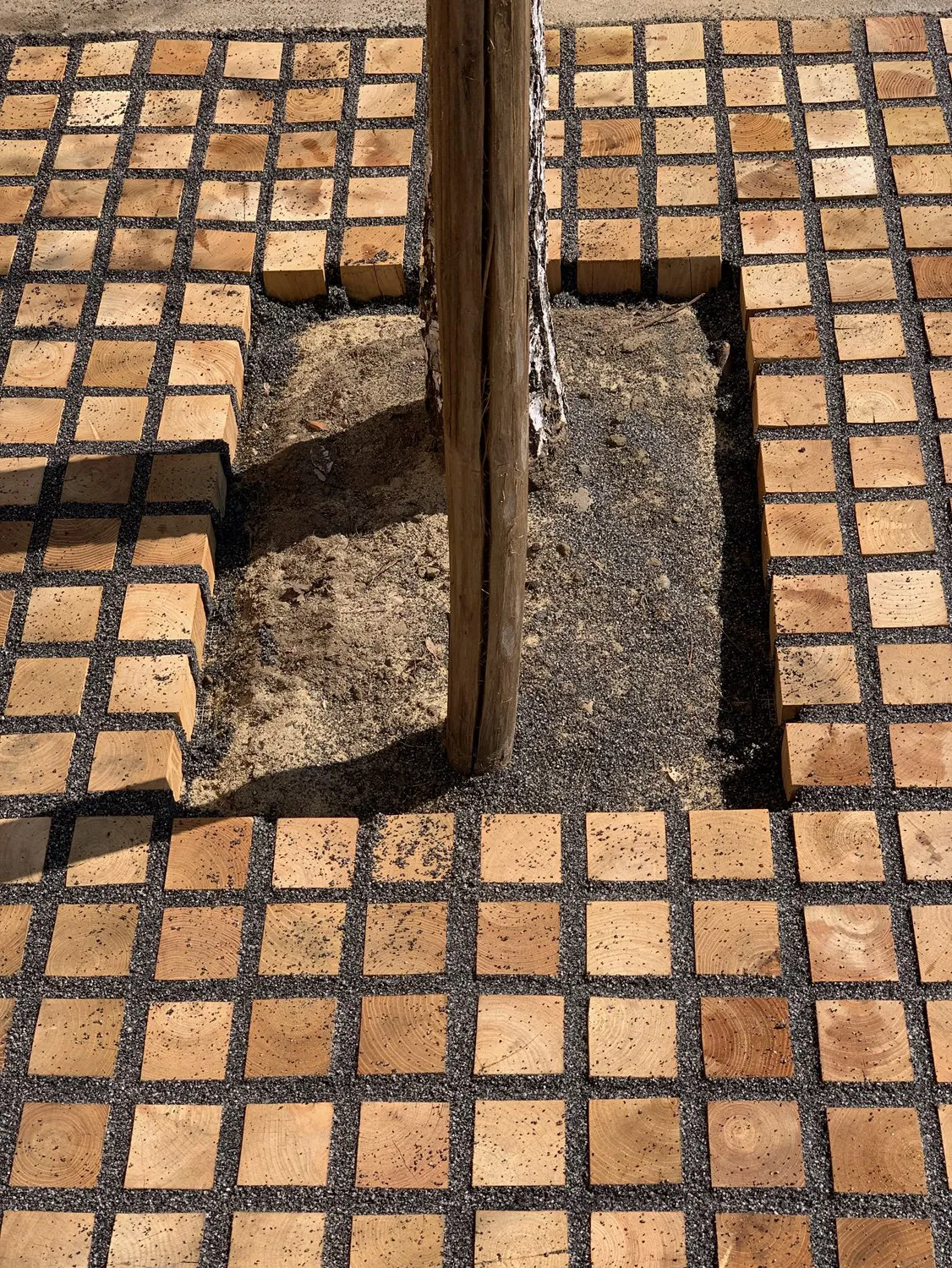
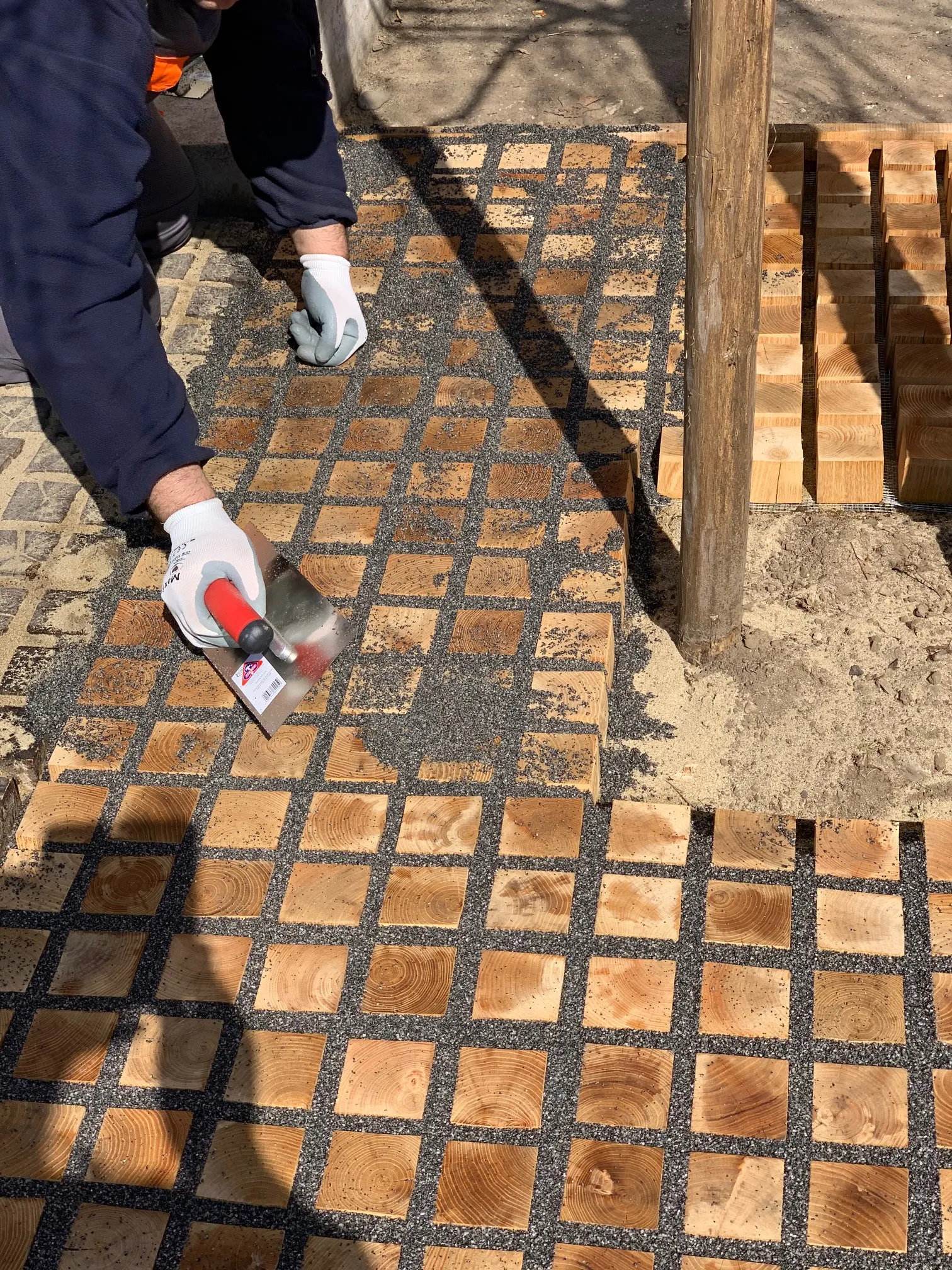
Open joints between individual pavers allow rainfall to move downward through the paving system into the underlying soil. Rather than becoming runoff, water reaches the tree's rooting zone where it can be used naturally.
This improved infiltration reduces dependence on supplemental irrigation while supporting healthier root development.
For municipalities facing increasingly frequent heavy rain events, permeable tree pits also contribute to better stormwater management by reducing localized runoff and helping recharge groundwater supplies.
Giving Tree Roots the Air They Need
Roots do not simply absorb water.
They are living tissues that constantly respire, requiring oxygen to produce the energy needed for growth.
In compacted or poorly aerated soils, oxygen becomes limited. Without adequate air exchange, roots cannot function efficiently.
Permeable tree pit systems encourage better gas exchange between the atmosphere and the soil.
As rainfall infiltrates and evaporates, fresh air naturally circulates through the pore spaces within the paving structure. This ongoing exchange helps maintain healthier soil conditions compared with completely sealed surfaces.
Improved aeration benefits not only the roots themselves but also the countless microorganisms that break down organic matter and make nutrients available to trees.
Healthy soil is alive, and permeable surfaces help maintain that living ecosystem.
Cooler Surfaces Mean Less Stress
Temperature plays a surprisingly important role in tree health.
When pavements become excessively hot, they increase soil temperatures around the roots while simultaneously raising air temperatures near pedestrians.
Wood behaves very differently from concrete or asphalt.
As a natural material, Black Locust wood absorbs and stores less heat than many conventional paving materials. Combined with the permeable nature of the installation, this helps create a cooler environment around the base of the tree.
Lower soil temperatures reduce moisture loss, improve root performance, and contribute to healthier long-term growth.
At the same time, cooler surfaces improve comfort for people walking, resting, or gathering beneath the tree canopy.
The relationship becomes mutually beneficial: healthier trees provide more shade, while cooler paving helps trees remain healthy enough to continue producing that shade.
Protecting the Root Zone
Tree roots require space.
Although the trunk is highly visible, the majority of a tree exists underground. Fine roots responsible for absorbing water and nutrients often occupy the upper layers of soil, making them especially vulnerable to disturbance.
Traditional paving systems frequently restrict root expansion or encourage roots to grow near the surface where they may eventually lift rigid pavements.
Permeable wood paver systems accommodate more natural soil movement while reducing many of the stresses associated with completely sealed surfaces.
Instead of forcing the tree into an artificial environment, the paving works alongside natural biological processes.
Protecting the root zone ultimately protects the entire tree.
A healthier root system supports stronger branches, fuller foliage, improved drought resistance, and greater resilience against storms and environmental stress.
Why Black Locust Is an Ideal Material
Selecting the right wood species is just as important as selecting the right paving system.
Black Locust is widely recognized for its exceptional natural durability. Its heartwood contains compounds that provide remarkable resistance to decay and insects without relying on chemical treatments.
This natural durability makes Black Locust particularly well suited for outdoor applications where longevity and environmental performance are equally important.
Its warm appearance complements natural landscapes, historic districts, contemporary architecture, and urban parks alike.
Unlike synthetic materials that often become visually harsher over time, wood develops character while maintaining a timeless aesthetic that blends naturally with trees and surrounding vegetation.
Using responsibly sourced Black Locust also supports sustainable landscape construction by utilizing a renewable material capable of storing carbon throughout its service life.
Tree Pits as Part of Green Infrastructure
Modern cities increasingly recognize that trees are not simply decorative features—they are essential infrastructure.
Healthy urban forests reduce energy consumption by shading buildings, intercept rainfall before it reaches the ground, improve air quality, reduce noise pollution, and enhance mental well-being.
Tree pits designed with permeable wood pavers become part of this broader green infrastructure network.
Instead of isolating trees within hardscape, they help reconnect urban landscapes with natural water cycles.
Every rainfall becomes an opportunity to nourish trees, replenish groundwater, and reduce runoff.
When multiplied across an entire city, these individual tree pits collectively contribute to more resilient, climate-adapted communities.
Creating Better Public Spaces
People naturally gravitate toward trees.
Outdoor cafés seek shaded seating areas. Parks become more inviting beneath mature canopies. Commercial districts feel more comfortable when lined with healthy street trees.
The condition of the tree directly influences the quality of the surrounding public space.
Permeable wood pavers help create clean, accessible walking surfaces while preserving the health of the trees that define these environments.
Instead of choosing between aesthetics and functionality, designers can achieve both.
The natural texture of wood softens urban landscapes, creating a warmer and more welcoming atmosphere than large expanses of concrete alone.
This combination of beauty, environmental performance, and durability makes permeable wood pavers suitable for universities, corporate campuses, botanical gardens, waterfronts, hospitality projects, residential developments, parks, and pedestrian streets alike.
A Long-Term Investment in Healthier Trees
Planting a tree is an investment that should last generations.
Unfortunately, many urban trees never reach maturity because the environment surrounding them limits their ability to thrive.
Choosing permeable wood pavers for tree pits represents an investment not only in attractive hardscape but also in the long-term health of the landscape itself.
Healthier roots support healthier trees. Healthier trees create cooler streets, cleaner air, greater biodiversity, improved stormwater management, and more enjoyable outdoor spaces for everyone.
As cities continue adapting to climate change, resilient landscape design will become increasingly important. Solutions that allow natural systems to function within developed environments will play a critical role in building sustainable communities.
Tree pits may seem like a small part of a landscape project, but their impact extends far beyond the base of a single tree. Every healthy tree contributes to the environmental, social, and economic value of the surrounding community.
By combining permeable design with the natural durability of Black Locust wood, tree pit pavers provide a thoughtful solution that supports trees rather than competing with them. They help rainwater reach the roots, encourage healthier soil conditions, reduce surface temperatures, and create beautiful public spaces where people and nature can flourish together.
When landscapes are designed with the needs of trees in mind, everyone benefits—from the trees themselves to the communities that enjoy their shade for decades to come.
