

Learn how permeable pavers help reduce ice formation on walkways by improving drainage and safety. Discover the benefits for winter-ready surfaces.
Winter turns walkways into some of the most dangerous spaces in the built environment. Sidewalks, plazas, courtyards, garden paths, and pedestrian zones that function perfectly in summer suddenly become slip hazards once temperatures drop. Ice, not snow, is the real enemy—and traditional hardscape materials unintentionally help create it.
Permeable pavers offer a fundamentally different approach to winter safety. Instead of fighting ice with salt, chemicals, and constant maintenance, they reduce ice formation at its source: standing water.
This article explores—step by step—how permeable pavers reduce ice formation on walkways, why this matters for safety and sustainability, and how wood-based permeable pavers perform in cold climates.
Why Ice Forms on Walkways in the First Place
To understand why permeable pavers perform better in winter, we first need to understand how ice forms on conventional surfaces.
The Ice-Creation Formula
Ice forms when three conditions come together:
- Moisture (rain, snowmelt, refreezing runoff)
- A non-absorbing surface
- Temperatures below freezing
Concrete, asphalt, and stone are sealed or semi-sealed surfaces. When snow melts during the day—due to sun exposure, foot traffic, or mild temperatures—the meltwater has nowhere to go. It spreads across the surface or collects in low spots. As temperatures drop again in the evening, that water freezes into a thin, nearly invisible ice layer known as black ice.
This daily melt–refreeze cycle is the leading cause of winter slip-and-fall accidents.
%20m%C3%A1solat.webp)
The Hidden Danger of Standing Water
Most people associate winter danger with snow, but snow alone is rarely the problem.
Snow vs. Ice
- Snow provides texture and friction
- Ice creates a smooth, low-friction surface
Ironically, many traditional winter maintenance practices make things worse:
- Plowing compresses snow into ice
- Salt melts snow into water, which later refreezes
- Sealed surfaces trap meltwater
The real issue is not cold—it’s water that cannot escape.
What Makes Permeable Pavers Different?
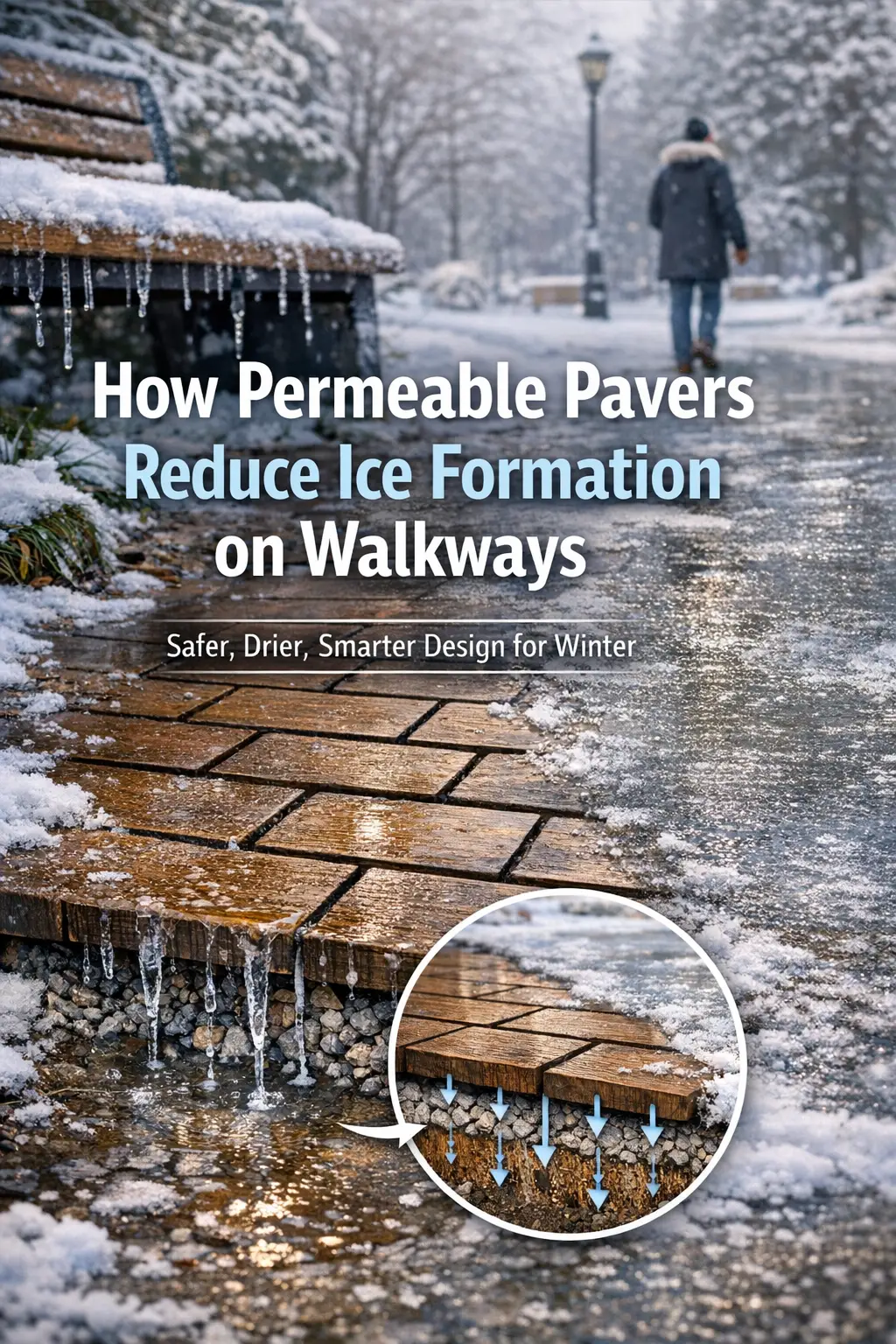
Permeable pavers are designed to do one thing exceptionally well: move water vertically instead of horizontally.
How a Permeable System Works
A complete permeable paver system consists of:
- Open or semi-open surface joints
- A permeable bedding layer
- A free-draining aggregate base
- Native soil capable of infiltration
Instead of shedding water across the surface like concrete, permeable pavers allow water to:
- Drain through joints
- Pass into the base layer
- Infiltrate into the ground below
This function remains critical in winter.
Snowmelt on Permeable Walkways: What Actually Happens
When snow falls on a permeable walkway, the system behaves differently at every stage.
Stage 1: Snow Accumulation
Snow settles normally on the surface. There is no disadvantage compared to traditional paving.
Stage 2: Daytime Melting
As temperatures rise:
- Snow begins to melt
- Meltwater reaches the surface
- Instead of spreading, water drains downward immediately
Stage 3: Temperature Drop
When temperatures fall again:
- There is little to no water left on the surface
- Less refreezing occurs
- Ice formation is significantly reduced
This is the single most important winter safety advantage of permeable pavers.
Why Permeable Walkways Dry Faster
Dry surfaces are safer surfaces.
Permeable pavers dry faster because:
- Water drains away instead of pooling
- Capillary action pulls moisture downward
- Air circulation occurs within the joint structure
Even in sub-freezing conditions, this drainage reduces the amount of water available to freeze on the walking surface.
The Role of Thermal Mass and Subsurface Conditions
Another overlooked factor in ice formation is temperature stability below the surface.
Subsurface Temperatures Matter
While air temperature fluctuates rapidly, the ground beneath a permeable system:
- Changes temperature more slowly
- Often remains warmer than surface air
- Helps delay refreezing from below
This does not mean permeable pavers “melt ice,” but it does mean:
- Ice bonds less aggressively
- Refreezing occurs more slowly
- Thin ice layers are easier to break or avoid
Wood Pavers and Winter Grip
Material choice matters.
Natural Traction
Wood-based pavers offer:
- A naturally textured surface
- Micro-grain variation
- Less polished finish compared to stone or concrete
These characteristics improve slip resistance, especially when combined with reduced ice formation.
Unlike smooth concrete or stone slabs, wood pavers do not create large, uninterrupted icy sheets.
Why Less Ice Means Less Salt
Salt is commonly used to manage ice, but it comes with serious drawbacks:
- Damages soil and plants
- Pollutes groundwater
- Corrodes nearby metal
- Degrades concrete over time
- Irritates pet paws and skin
Because permeable pavers reduce ice formation:
- Less salt is needed
- In some cases, no salt is required at all
- Mechanical snow removal becomes more effective
This aligns perfectly with environmentally responsible design.
Safer Walkways for Public and Private Spaces
Slip-and-fall incidents are one of the most common winter liabilities.
Where This Matters Most
- Residential walkways and drive paths
- Commercial entrances
- Campuses and schools
- Parks and public plazas
- Pedestrian-only streets
- Courtyards and garden paths
Reducing ice formation reduces:
- Injury risk
- Legal exposure
- Maintenance costs
- Emergency response needs
Freeze–Thaw Cycles and Surface Integrity
Ice formation does more than cause slips—it damages infrastructure.
Traditional Surfaces
When water freezes in cracks or joints:
- It expands
- Creates internal stress
- Leads to cracking, spalling, and surface failure
Permeable Systems
Because water drains away:
- Freeze–thaw stress is reduced
- Structural longevity increases
- Surfaces remain more even over time
A flatter, more stable surface is inherently safer to walk on in winter.
Snow Removal on Permeable Walkways
Permeable pavers are fully compatible with snow removal.
Best practices include:
- Plastic or rubber-edged shovels
- Raised-blade plows
- Avoiding excessive downward pressure
- Letting thin snow layers protect the surface when appropriate
Because ice bonds less aggressively, removal is often easier.
Urban Design Implications
Cities struggle with winter maintenance:
- High salt usage
- Frozen storm drains
- Slushy intersections
- Repeated surface repairs
Permeable walkways offer a long-term solution by:
- Reducing surface ice
- Managing meltwater on-site
- Supporting winter stormwater resilience
- Improving pedestrian safety without chemicals
Environmental Benefits Continue Through Winter
Permeability does not “pause” in winter.
Even during cold months:
- Snowmelt recharges soil moisture
- Tree roots receive oxygen and water
- Soil ecosystems remain healthier
- Urban runoff pollution is reduced
Winter is often the most overlooked season in sustainable design—and one of the most important.
Designing for Winter, Not Just Summer
Many outdoor surfaces are designed for aesthetics, not performance.
Permeable pavers flip that logic:
- Function first
- Safety built in
- Beauty as a natural result
Designing walkways that remain usable, safe, and resilient in winter is no longer optional—it is a responsibility.
The Big Picture: Ice Reduction by Design
Permeable pavers don’t eliminate winter.
They eliminate avoidable risk.
By allowing water to drain instead of freeze:
- Walkways stay drier
- Ice forms less frequently
- Maintenance becomes simpler
- Safety improves naturally
This is not a temporary fix—it’s a design solution rooted in physics, hydrology, and material intelligence.
Drier Ground Is Safer Ground
Ice is not inevitable.
It is often the result of poor surface design.
Permeable pavers reduce ice formation on walkways by addressing the real cause: trapped water. Through intelligent drainage, natural traction, and subsurface stability, they create winter-ready pedestrian spaces that work with nature instead of against it.
When winter comes, the safest path forward isn’t more salt or more effort—it’s better design beneath your feet.
