

One of the most common questions architects, contractors, developers, and property owners ask before choosing permeable paving systems is simple:
Can pavers actually handle heavy vehicles?
It is a fair question. Traditional concrete and asphalt have long dominated roads, parking lots, industrial yards, and commercial access areas because people associate “hard” materials with durability. Wood, by contrast, is often misunderstood as soft, fragile, or temporary. That assumption changes quickly once people learn about Black Locust wood and how engineered permeable paving systems are designed to perform under real-world loads.
At ProFlow Permeable Pavers™, we work extensively with Black Locust wood because it combines extraordinary natural durability with structural strength and environmental performance. When properly engineered and installed, black locust permeable pavers are capable of supporting demanding vehicle traffic while delivering benefits that conventional paving systems simply cannot provide.
Understanding how this works requires looking deeper into load distribution, wood science, permeable system engineering, and the realities of vehicle traffic over time.
Why the “Wood Equals Weak” Assumption Is Wrong
Most people evaluate wood based on familiar species used in decks, fences, or residential landscaping. Softwoods such as pine or cedar are common in everyday construction, but they are not representative of high-density hardwoods like black locust.
Black locust is one of the hardest and strongest temperate hardwoods in North America and Europe. In many structural applications, it performs comparably to tropical hardwoods while offering exceptional resistance to decay, moisture, insects, and weather exposure.
Its density and compressive strength are significantly higher than many woods people typically encounter. Historically, black locust has been used for railroad ties, vineyard posts, marine structures, agricultural infrastructure, and demanding outdoor applications where longevity matters.
What makes this particularly important for paving is that compressive strength and resilience behave differently in wood than in rigid materials like concrete.
Concrete is strong under compression but brittle under stress concentration and freeze-thaw cycling. Asphalt flexes but degrades under heat, UV exposure, and repeated heavy loading. Black locust hardwood behaves differently because it naturally absorbs and distributes force through its cellular structure.
Instead of responding to pressure with brittle cracking, high-density hardwood fibers dissipate loads with controlled flexibility. This becomes especially valuable in permeable paving systems where ground movement, drainage, freeze-thaw cycles, and dynamic loads constantly interact.
The Real Question Is Not the Paver — It Is the System
When discussing whether heavy vehicles can damage pavers, the focus often lands entirely on the surface material. In reality, the strength of any paving system depends heavily on what lies underneath.
Even thick concrete slabs fail when subgrades are poorly compacted or drainage is inadequate. Rutting asphalt parking lots are usually symptoms of foundational failure rather than surface weakness alone.
Permeable paving systems are engineered as layered structural assemblies. The surface pavers are only one component within a broader load-bearing system designed to transfer forces into the ground evenly and efficiently.
Understanding Vehicle Loads in the Real World
Heavy vehicle traffic is not a single condition. Different types of vehicles create very different loading patterns.
A passenger vehicle creates relatively low point loads spread across four tires. Delivery vans introduce higher axle loads and more frequent turning stresses. Emergency vehicles create concentrated weight under braking and cornering. Industrial vehicles and trucks introduce repeated dynamic loading over time.
What matters most is not simply total vehicle weight, but how that load transfers into the paving surface and underlying structure.
For example, a fully loaded delivery truck creates stress concentrations at tire contact points. During turning maneuvers, lateral shear forces increase substantially. During braking, forward stress transfer intensifies.
Traditional rigid paving systems often respond to these conditions with cracking, edge failure, or surface spalling over time.
Black locust wood permeable pavers respond differently because the material itself possesses a natural elasticity that helps absorb stress without catastrophic fracture.
This does not mean the system is indestructible. No paving system is. But it does mean that properly designed hardwood permeable paving can perform exceptionally well under demanding conditions when engineered appropriately for traffic classification.
%20copy.webp)
Why Black Locust Performs So Well Under Load
The cellular structure of black locust hardwood is one of the key reasons it succeeds in heavy-duty outdoor environments.
Unlike brittle materials, dense hardwood fibers can compress microscopically and rebound repeatedly under load cycles. This resilience reduces sudden fracture risk and helps the material tolerate ongoing stress variations.
Black locust also has several additional advantages that make it particularly suitable for permeable paving systems:
Its natural decay resistance eliminates the need for heavy chemical treatment.
Its dimensional stability helps reduce excessive expansion and contraction.
Its high density improves wear resistance in traffic areas.
Its hardness minimizes surface deformation under repeated wheel loads.
Its durability in wet conditions makes it ideal for permeable systems where moisture management is constant.
This combination is rare in natural materials. Many hardwoods may be dense but unstable outdoors. Others resist moisture but lack sufficient structural hardness. Black locust uniquely balances these properties.
That balance is why it has become increasingly recognized in sustainable infrastructure and landscape architecture applications worldwide.
Permeability Changes the Performance Equation
Traditional impermeable surfaces trap water at the surface level. Over time, standing water accelerates deterioration.
Freeze-thaw damage, hydrostatic pressure, erosion beneath slabs, and surface cracking are all intensified when water cannot move effectively through a paving system.
Permeable paving fundamentally changes this relationship.
Instead of forcing water away rapidly through drains and runoff systems, permeable surfaces allow controlled infiltration through the paving structure and into the aggregate layers below.
This creates several structural advantages.
First, water pressure does not build beneath the pavement in the same way it does under impermeable surfaces.
Second, freeze-thaw cycles become less destructive because water is managed throughout the system rather than trapped in isolated areas.
Third, the aggregate base layers often remain more stable because drainage is integrated directly into the pavement design.
For heavy vehicle applications, this matters enormously. Water is frequently the hidden cause behind pavement failure. By managing moisture more effectively, permeable systems can significantly improve long-term structural reliability.
Where Heavy Vehicle Performance Matters Most
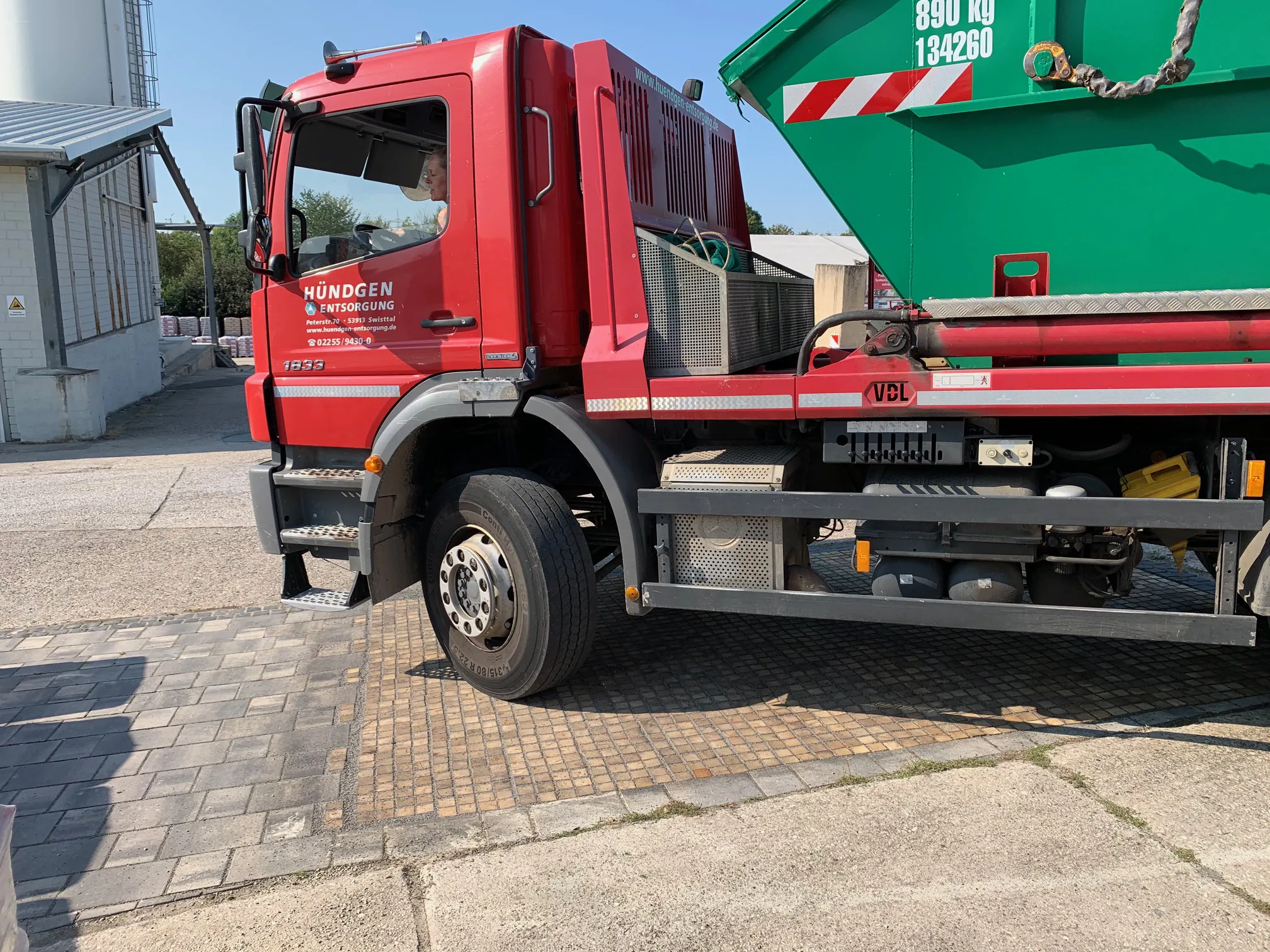
Many people assume permeable pavers are suitable only for decorative pedestrian pathways or light residential use. In reality, properly engineered systems are increasingly used in demanding commercial and institutional environments.
Black locust permeable pavers are being considered and specified for:
- Commercial parking areas
- Emergency access lanes
- Fire truck routes
- Hospital access roads
- Urban plazas with service vehicle access
- Educational campuses
- Eco-resorts and hospitality projects
- Mixed-use developments
- Municipal sustainability projects
- High-end residential driveways
- Landscape architecture projects requiring stormwater compliance
These environments often involve repeated vehicle traffic, service access, and occasional heavy loading events.
The key distinction is always engineering design.
A pedestrian plaza and a fire access route require entirely different base preparations, aggregate depths, and load calculations. When the system is engineered correctly for expected traffic conditions, black locust permeable pavers can perform extremely well.
The Importance of Proper Base Design
One of the biggest misconceptions in paving is that surface thickness alone determines strength.
In reality, sub-base engineering is often more important than the visible surface itself.
A well-designed permeable paving base functions like a structural foundation. Open-graded aggregate layers interlock to distribute loads horizontally and vertically. Proper compaction ensures stability while maintaining infiltration capacity.
For heavy-duty applications, deeper aggregate bases are typically required to manage repeated axle loading effectively.
Soil conditions also matter greatly.
Clay-heavy soils may require additional stabilization. Areas with poor drainage may need underdrain systems. Freeze-thaw regions require careful hydrological planning.
The performance of any paving system — concrete, asphalt, or wood — depends heavily on matching engineering design to environmental conditions and expected traffic.
This is where experienced permeable paving design becomes critical.
Comparing Black Locust to Conventional Pavement Systems
Traditional asphalt and concrete remain widely used because they are familiar, not necessarily because they are always superior.
Concrete surfaces can crack under settlement and freeze-thaw stress. Repairs are often highly visible and difficult to blend aesthetically.
Asphalt deforms under heat, oxidizes over time, and frequently requires resurfacing cycles.
Impermeable systems also contribute heavily to stormwater runoff problems, urban heat buildup, and drainage infrastructure strain.
Black locust permeable pavers approach paving differently.
Rather than resisting nature entirely, they work with environmental conditions by allowing water infiltration, moderating surface temperatures, and adapting more dynamically to stress variation.
Additionally, black locust offers significant sustainability advantages.
- The material is renewable.
- Carbon storage remains locked within the wood.
- Stormwater runoff is reduced.
- Heat island effects are minimized compared to dark asphalt surfaces.
- Drainage infrastructure demands may decrease.
For modern projects pursuing environmental certifications, low-impact development goals, or climate-responsive design strategies, these advantages are becoming increasingly important.
Durability Over Time
Long-term performance is one of the most important considerations for any paving investment.
Heavy vehicle traffic does not usually destroy paving systems overnight. Damage accumulates gradually through cycles of stress, moisture exposure, temperature fluctuation, and subgrade movement.
Black locust performs exceptionally well in outdoor exposure because of its natural resistance to biological degradation. Unlike many wood species, it does not rely heavily on chemical preservatives to resist decay.
This makes it especially valuable in permeable systems where moisture presence is constant by design.
Over time, black locust develops a weathered appearance that many architects and designers find highly attractive. Structurally, however, the material retains impressive durability when properly maintained and installed.
Maintenance strategies are also different from conventional pavement systems.
Instead of large-scale resurfacing or crack sealing operations, permeable paving maintenance typically focuses on maintaining infiltration performance and ensuring aggregate stability.
Individual modular components can also be repaired or replaced more selectively if localized damage occurs.
Designing for the Future of Infrastructure
Cities and developers increasingly face pressure to improve stormwater management, reduce environmental impact, and create infrastructure that is both resilient and visually appealing.
Traditional impermeable paving systems are being reevaluated as municipalities confront flooding, aging drainage systems, and rising environmental standards.
Permeable paving is no longer viewed as a niche landscaping product. It is becoming part of broader infrastructure conversations.
Black locust wood permeable pavers occupy a particularly unique position within this evolution because they combine structural capability with ecological performance and architectural warmth.
They challenge the assumption that durable infrastructure must always look industrial or environmentally harsh.
Instead, they demonstrate that engineered natural materials can perform at high levels when design, material science, and installation expertise come together properly.
So, Can Heavy Vehicles Damage Pavers?
Any paving system can fail if it is poorly designed, improperly installed, or used beyond its intended load classification.
But the idea that wood permeable pavers are inherently weak is simply incorrect.
When engineered correctly, black locust permeable pavers can support demanding vehicle applications while providing substantial environmental and aesthetic advantages over conventional pavement systems.
The true determinant of performance is not whether the surface is wood, concrete, or asphalt.
It is whether the entire system has been designed intelligently for real-world conditions.
At ProFlow Permeable Pavers, black locust is selected specifically because it offers the rare combination of structural resilience, natural durability, permeability compatibility, and long-term outdoor performance needed for modern sustainable paving systems.
Heavy vehicles are not automatically a problem for permeable pavers.
Poor engineering is.
And when the engineering is done right, black locust wood permeable paving becomes far more capable than most people ever expect.
